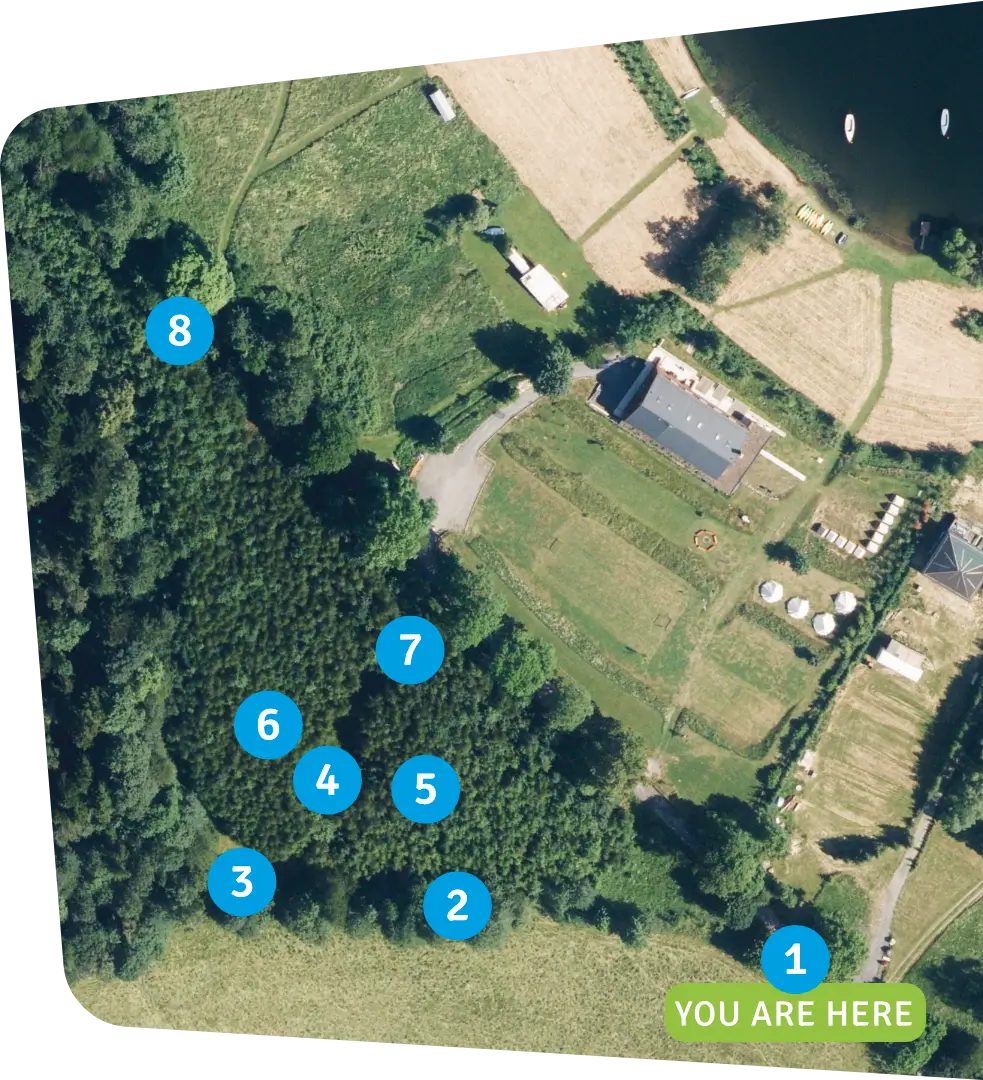

At the end of the Second World War, an abandoned cannon was left here. It was a real treat for the local children! Hence the name 'By the Cannon'. At the foot of the Bee Forest, farming gradually ceased, and the original fields and meadows were replaced by a new forest. A young spruce monoculture was planted around 2015, and part of the former field became naturally overgrown with trees.
We'll explain these changes to you at the various stops along the way. You'll learn what 'meze' are and how they came about, why the soil in a field is different from that in a forest, what pioneer tree species are, how a natural forest is restored, and why old trees are important.
The young tree stands are gradually being developed into a small woodland park, which serves both educational and recreational purposes. You'll walk through the woodland park back to the paved path lined with a historic orchard of apple trees and picturesque, mighty trees.
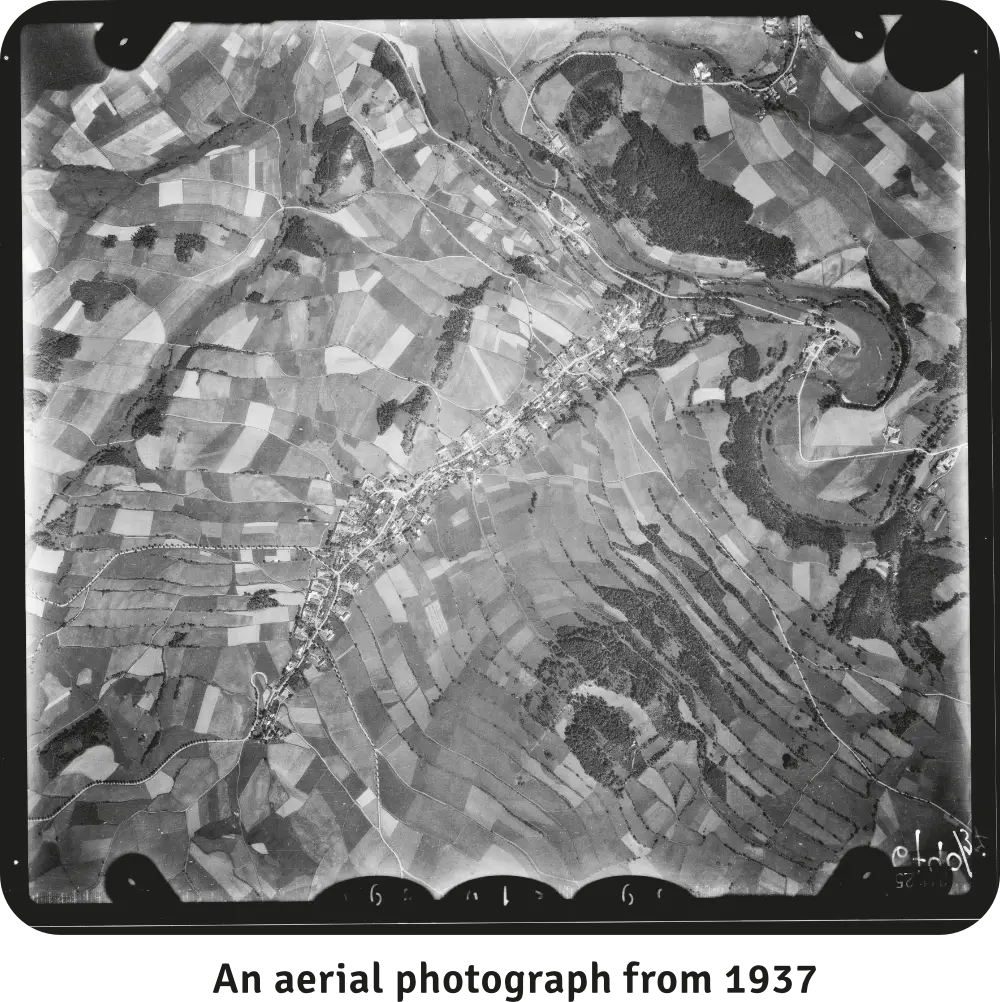
Was created in place of original forests. Through plowing and cultivation over many generations, the soil has changed greatly. Stones were removed to great depths. Heavy machinery compacts the soil, displacing air and water. Missing organisms that maintain its fertility are replaced by fertilizers. In contrast, forest soil is airy, loose and full of life. Water soaks deeper and is better retained.
Form a narrow strip that levels a slope. They most often formed by depositing stones collected from the edges of fields. The stones created a permeable barrier that slowed the flow of water from the field. They are important for increasing the natural diversity of the landscape, as they enable life for species of forest and open countryside alike.
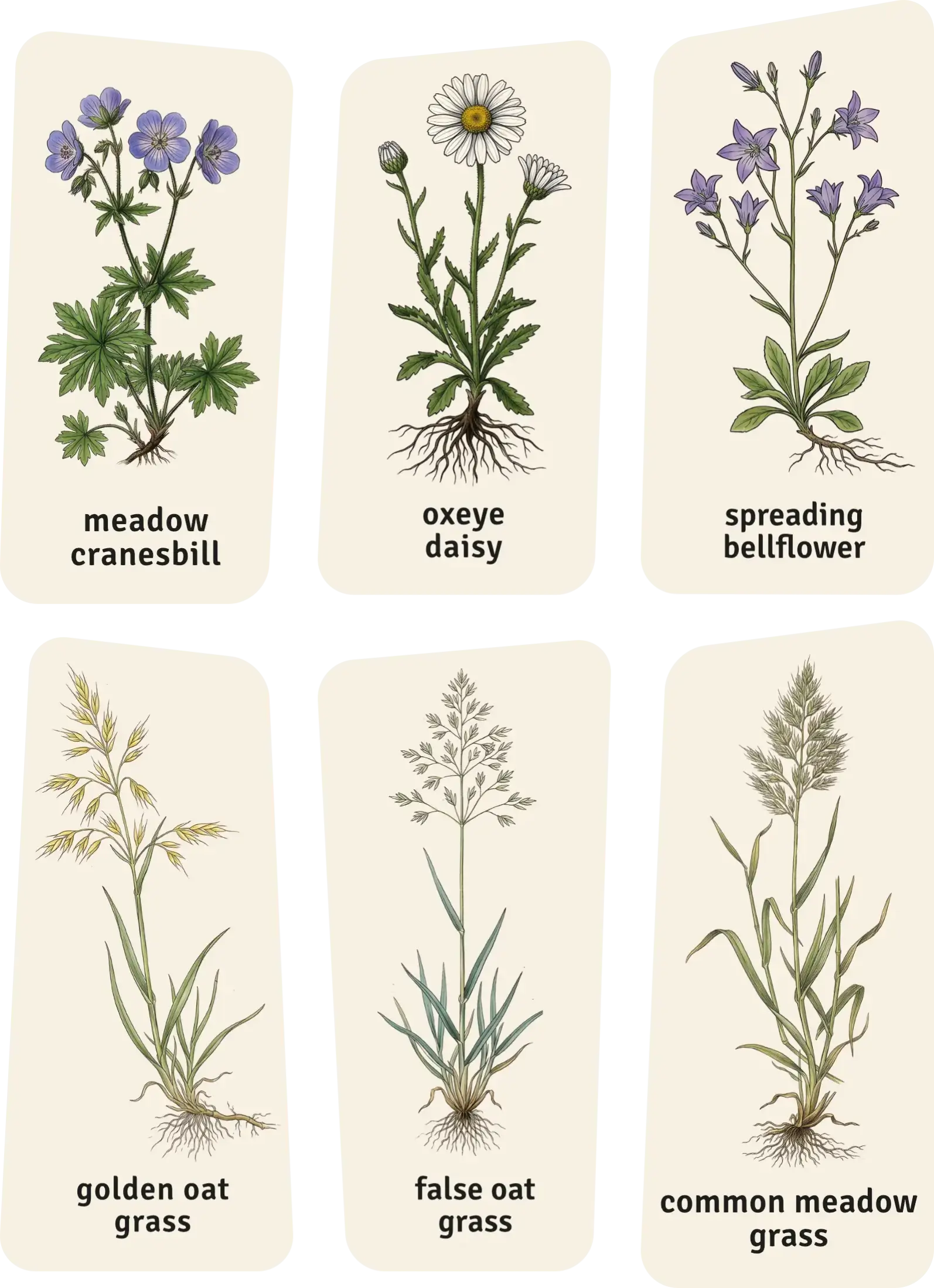
Was also forest once. Through grazing and mowing it is maintained without trees. The soil is not as compacted and is exposed to frost and wind. Rich life in the meadow takes place underground, at ground level and high above. Each meadow creates a unique and colourful ecosystem, but only as long as it is not fertilised and the cut grass is not left on it.

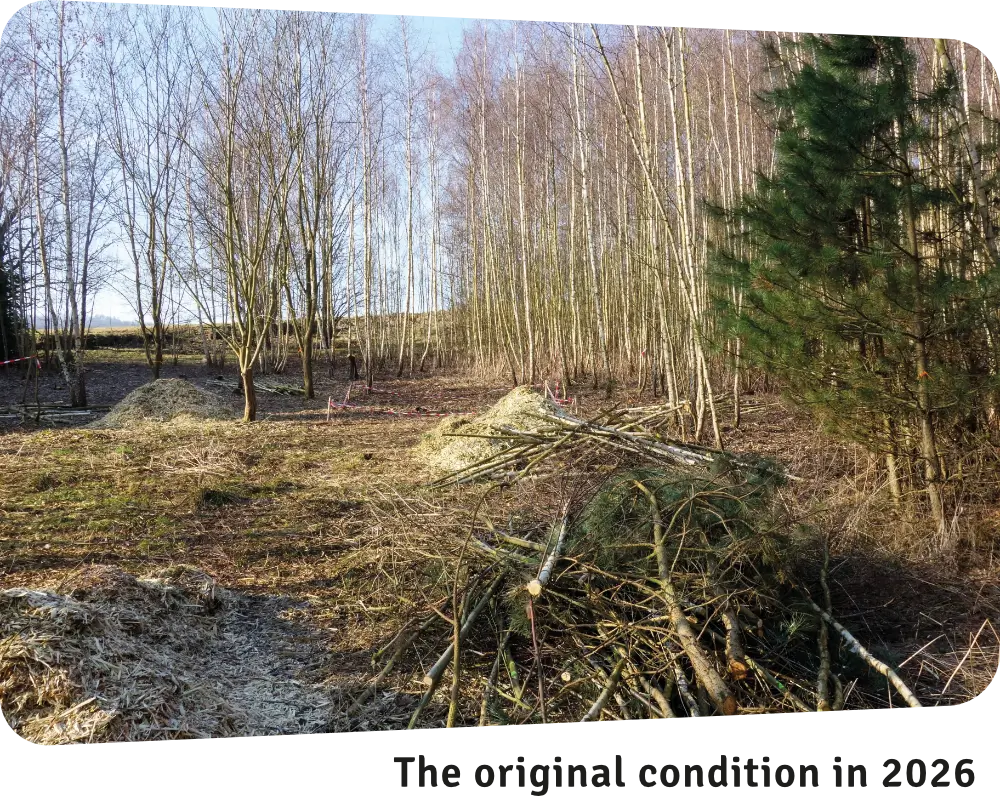
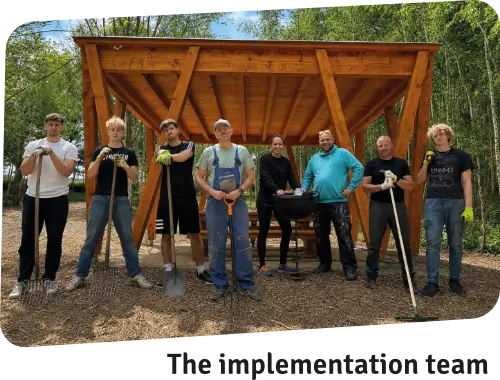
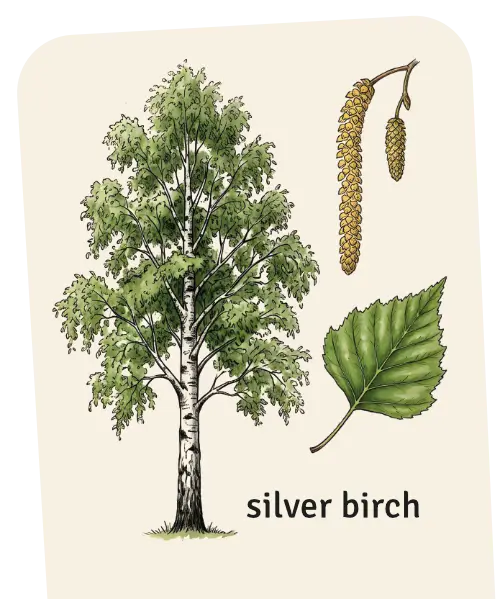
The forest park is being created through gradual and carefully planned silvicultural measures. The woodland has been managed to highlight its natural beauty. Work on the 'Under the Bee Forest' forest park began in 2026. The first stage involved preparing the site for the future birch grove. You can see what the area looked like before work began at the edge of the grove. During thinning operations, trees were left standing that are likely to grow into fine specimens with natural crowns. Groups of trees are arranged irregularly to create views of the wooden gazebo and smaller secluded spots. In addition to the predominant birch trees, other species have been retained in the stand to ensure diversity throughout the year. Thinning operations will be repeated until the trees reach full maturity.
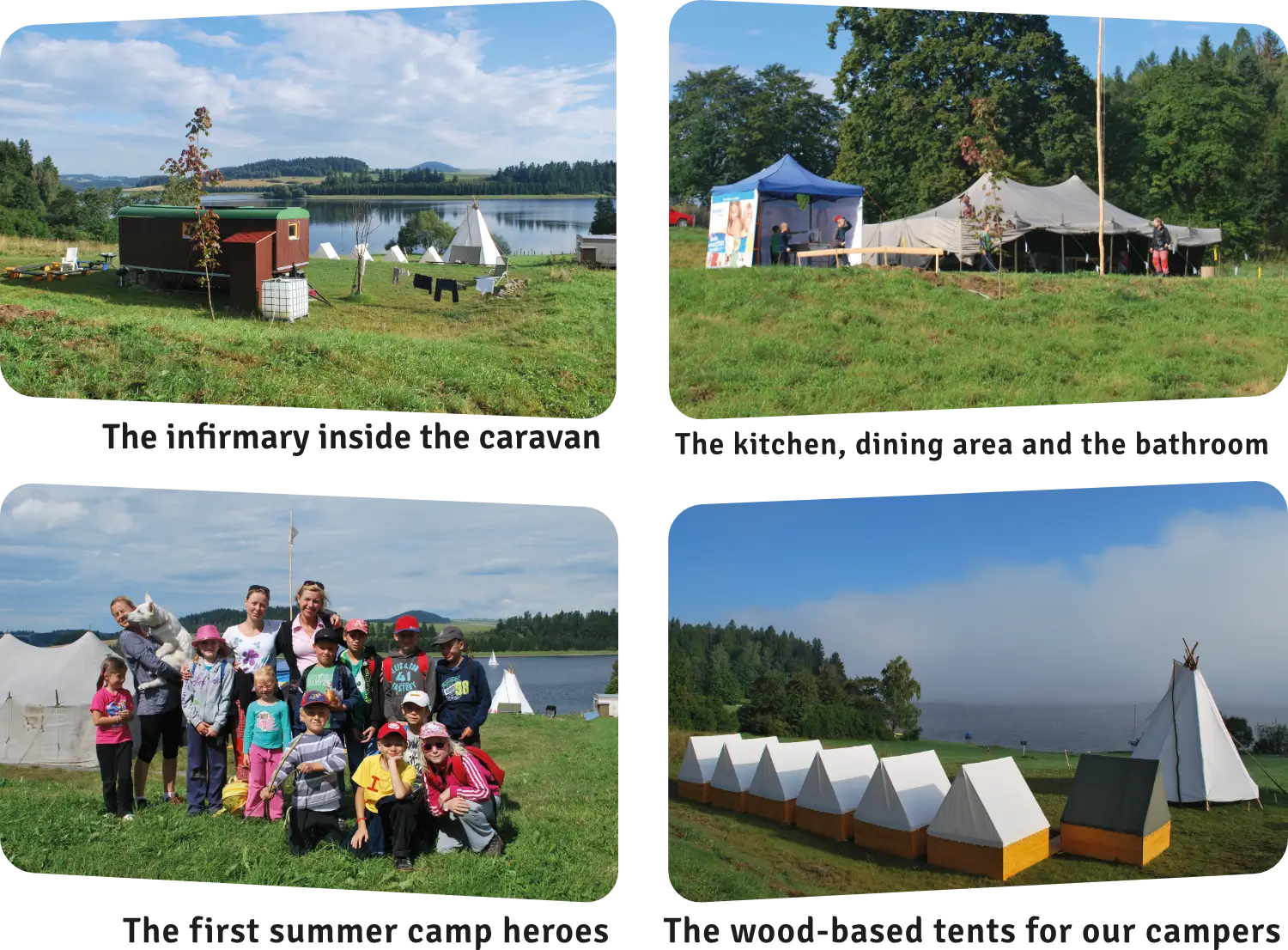
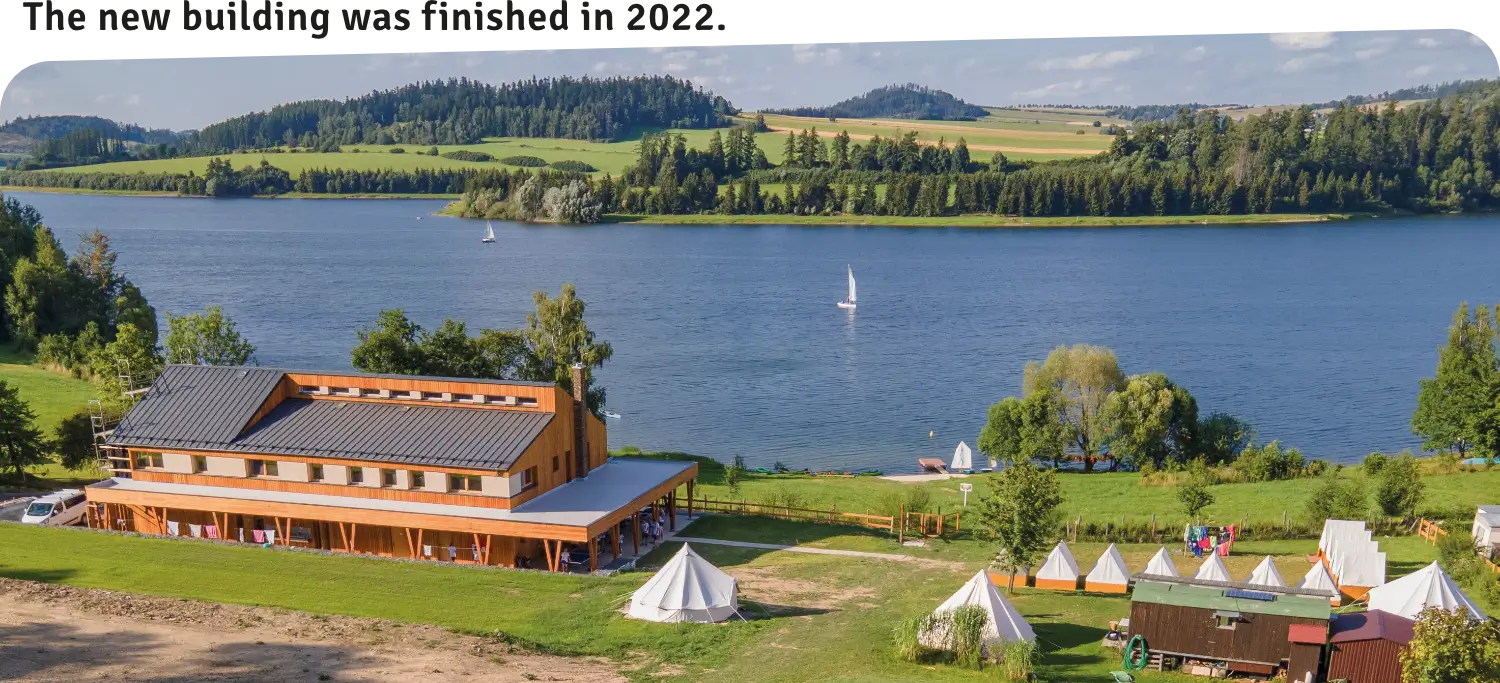
In 2012, on the banks of Slezská Harta, we discovered a place where our dream could begin to come true – to create a space for education, socialising and spending time in the countryside for both children and adults. We organised our first camp as early as 2014 – without running water or electricity. At that time, our facilities consisted of a large military tent housing the kitchen and dining area; we set up an infirmary in an attached caravan, and there were two portable toilets and one shower available. These modest facilities served us until 2021. After nine years of persistent effort and with the generous support of the village of Roudno and its council, we managed to install an electricity connection, dig a well and obtain planning permission. For the first time, there was hot water at Harta and a flushing toilet. The new building has enabled us to use Harta not only during the peak season, but for most of the year.
We built the trail you are currently standing on in 2026. We acquired the land from the municipality of Roudno, which supported our project and helped us transform it into a place for relaxation and discovery. Every decision we made was guided by respect for nature. We believe that when people create with humility and prioritise the landscape over their own ambitions, a place can emerge that brings people together, inspires and brings peace.
We would like to thank everyone who has been part of this story since 2012. We hope that nature will always remain the most important guide, even for those who will carry on on our work.
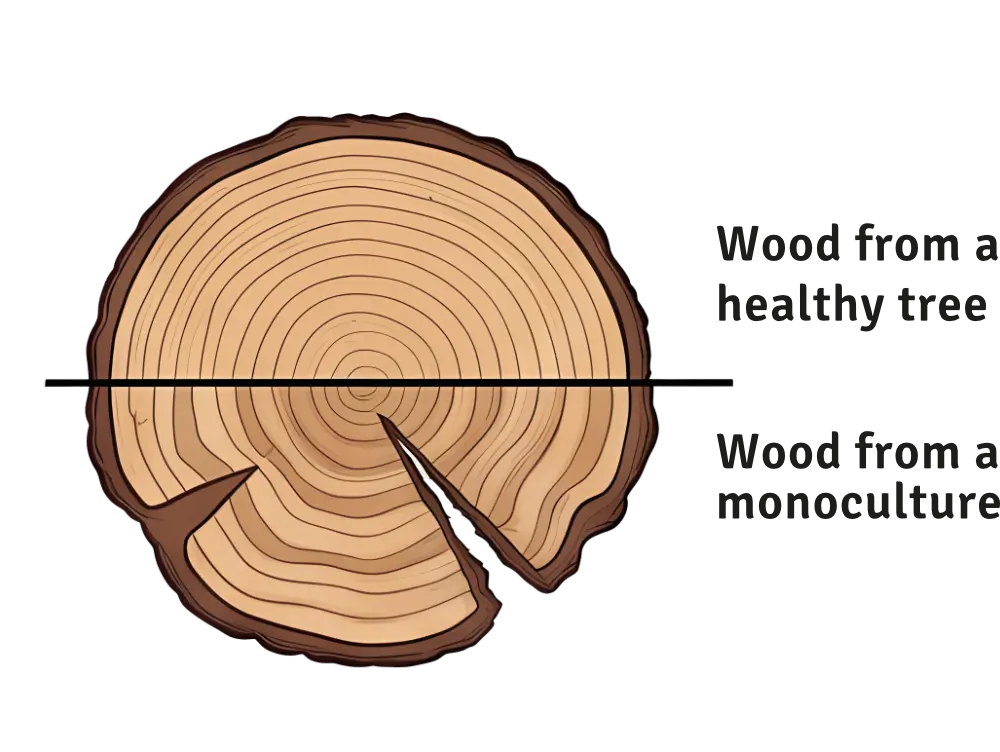
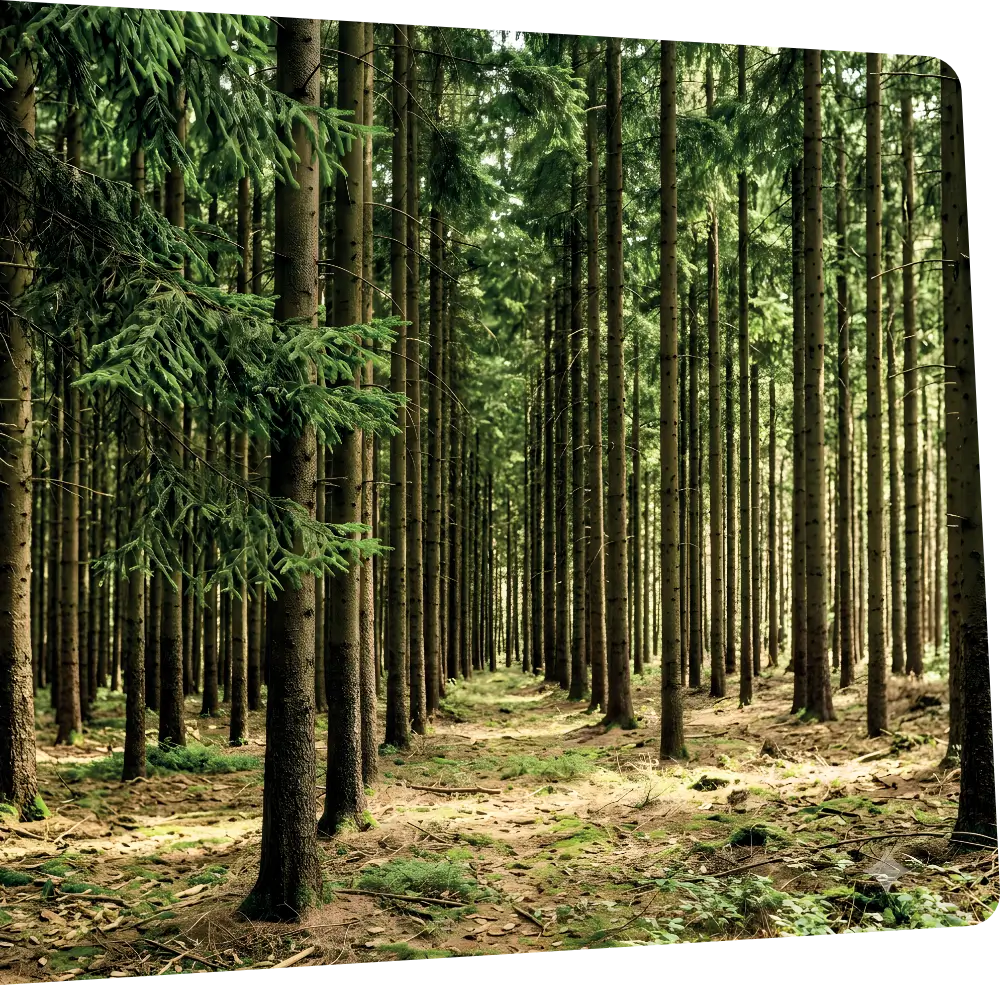
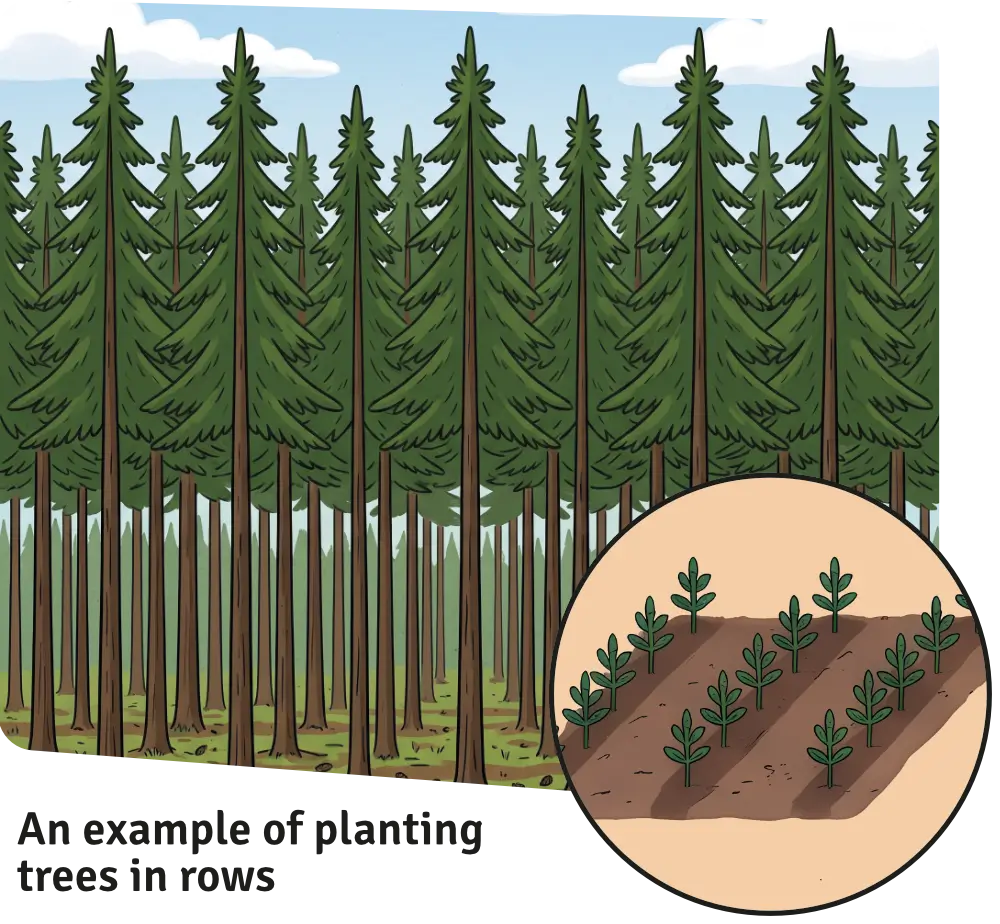
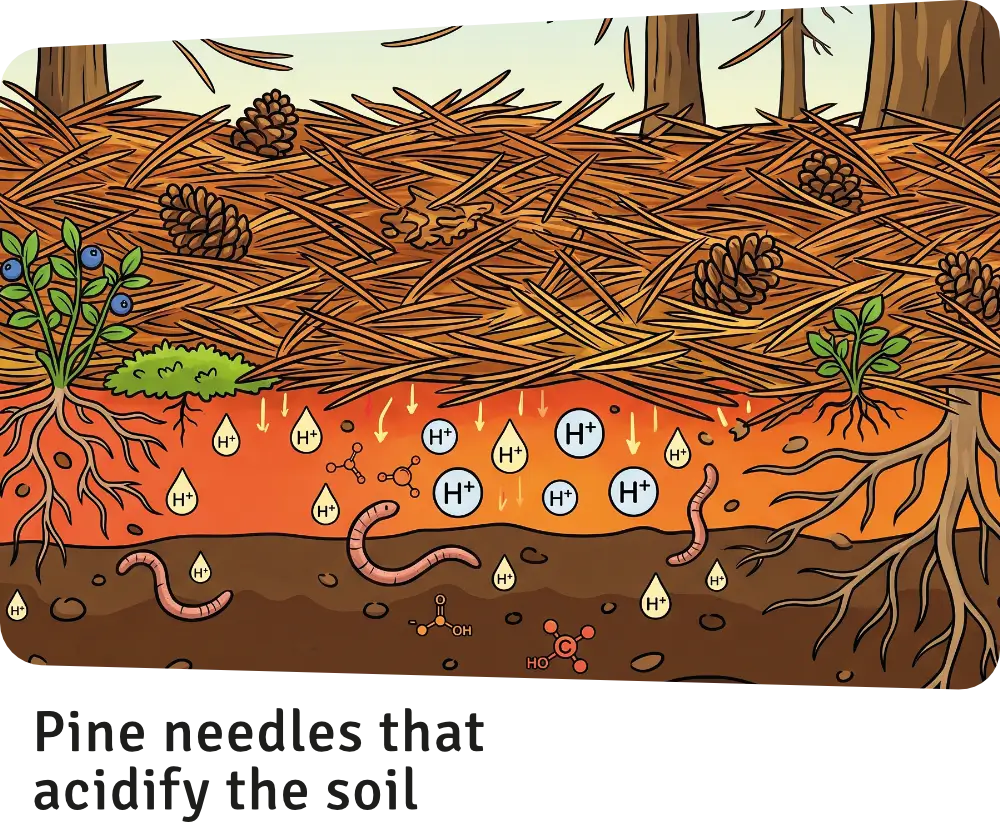
When we artificially plant just one species, we refer to it as a 'monoculture'. In this case, it is a monoculture of Norway spruce. The trees are planted in rows and very close together so that their crowns soon touch one another and shade the ground. This suppresses competing plants, and the trees remain slender and grow rapidly in height. The lower branches die off in the shade. This results in wood with few knots. However, the quality of the wood is poor on former arable land. The trees grow too quickly and are susceptible to disease. Only dry needles accumulate beneath the trees, which acidify the soil.
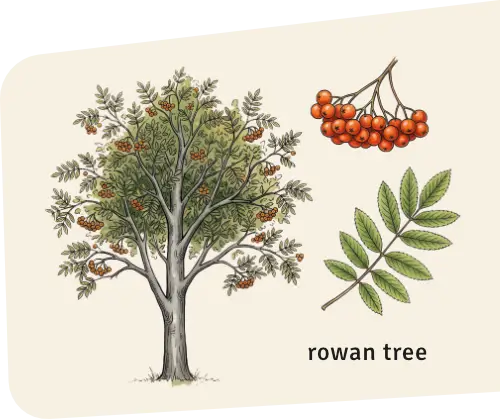
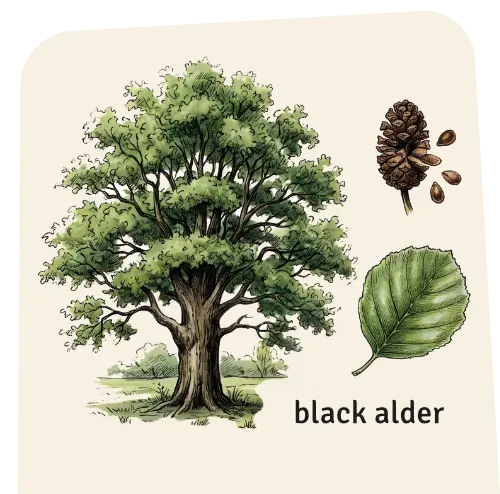
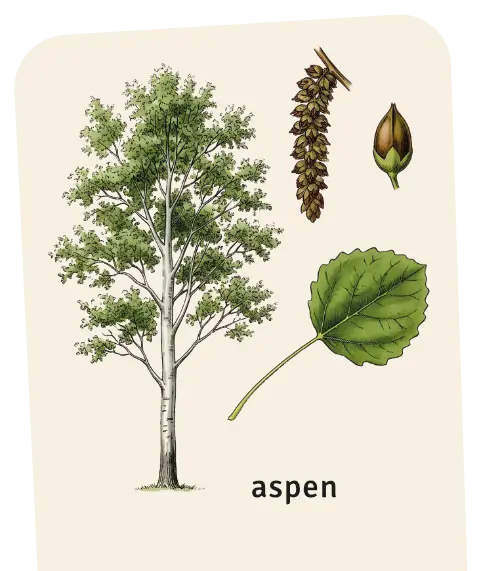
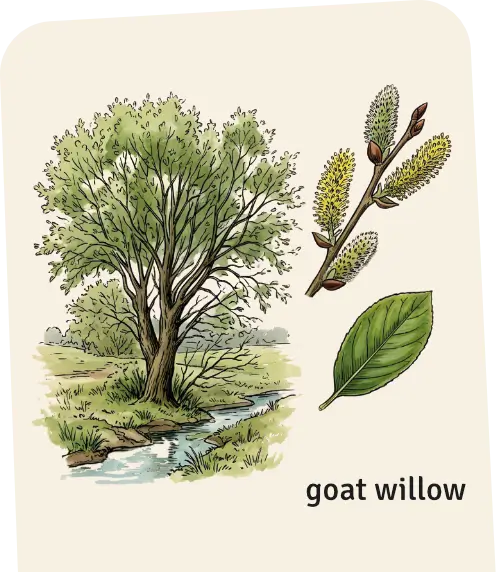
Birch, which grows all around here, as well as goat willow, aspen, alder and rowan, are known as pioneer tree species. Such species are characterised by rapid growth when young and greater resistance to adverse conditions (e.g. burnt areas, gravel deposits left by floods, as well as abandoned fields, areas affected by forest disasters or large-scale logging). Their seeds are dispersed by the wind or by birds. They have a relatively short lifespan of 60–120 years. It is only under their protection that species colonise the habitat, eventually forming a long-lived natural forest. Trees in the forest compete primarily for light. Consequently, the tree layer consists of species that grow to heights of 30 metres or more; these are predominantly oaks, beeches and ash trees, supplemented by firs, larches, pines, lindens, maples, hornbeams and elms. However, as the forest is constantly renewing itself, there is also plenty of living space for herbs and smaller woody plants. Together, all living things form complex relationships, which we are only gradually discovering and coming to understand.
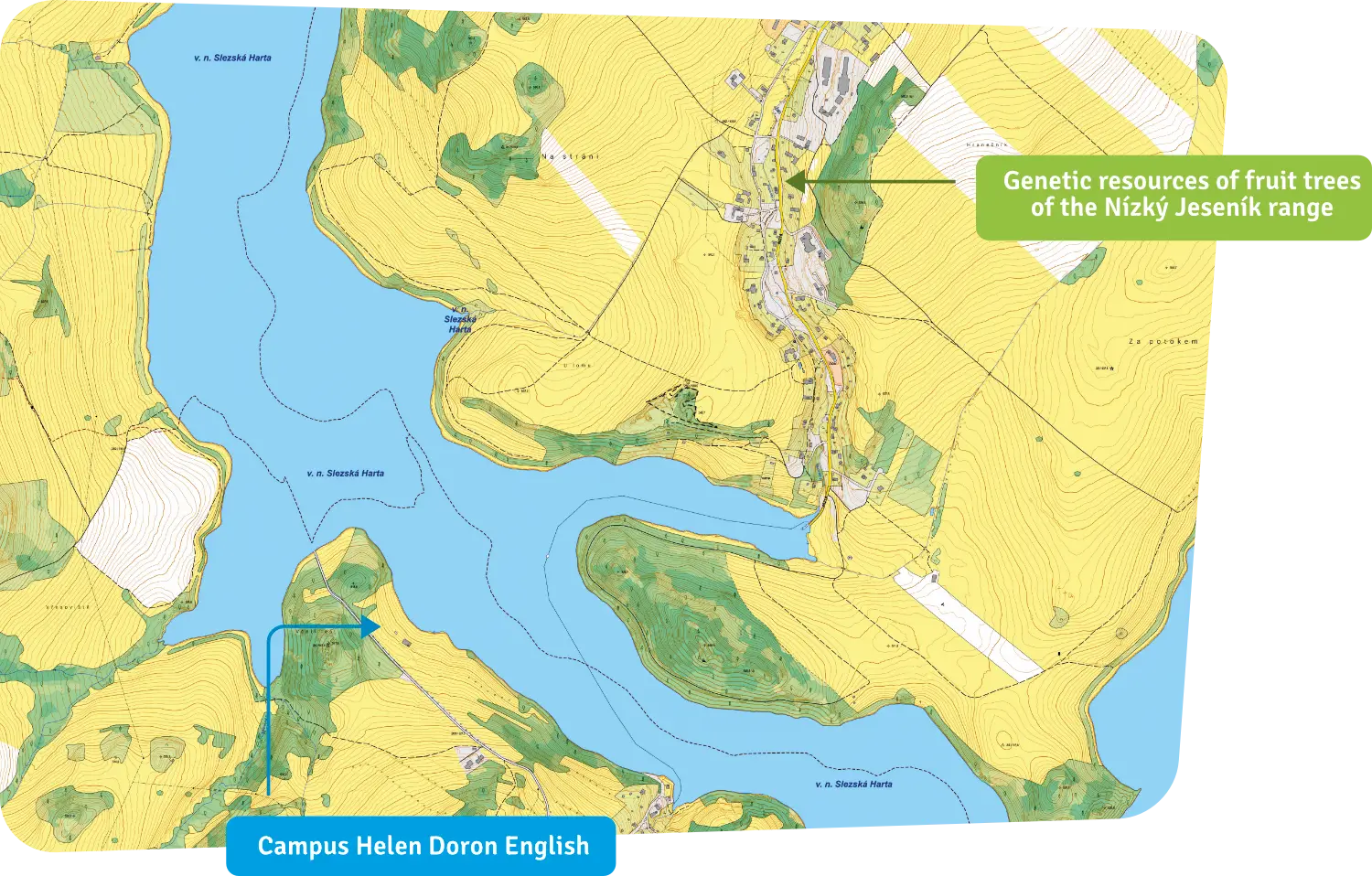
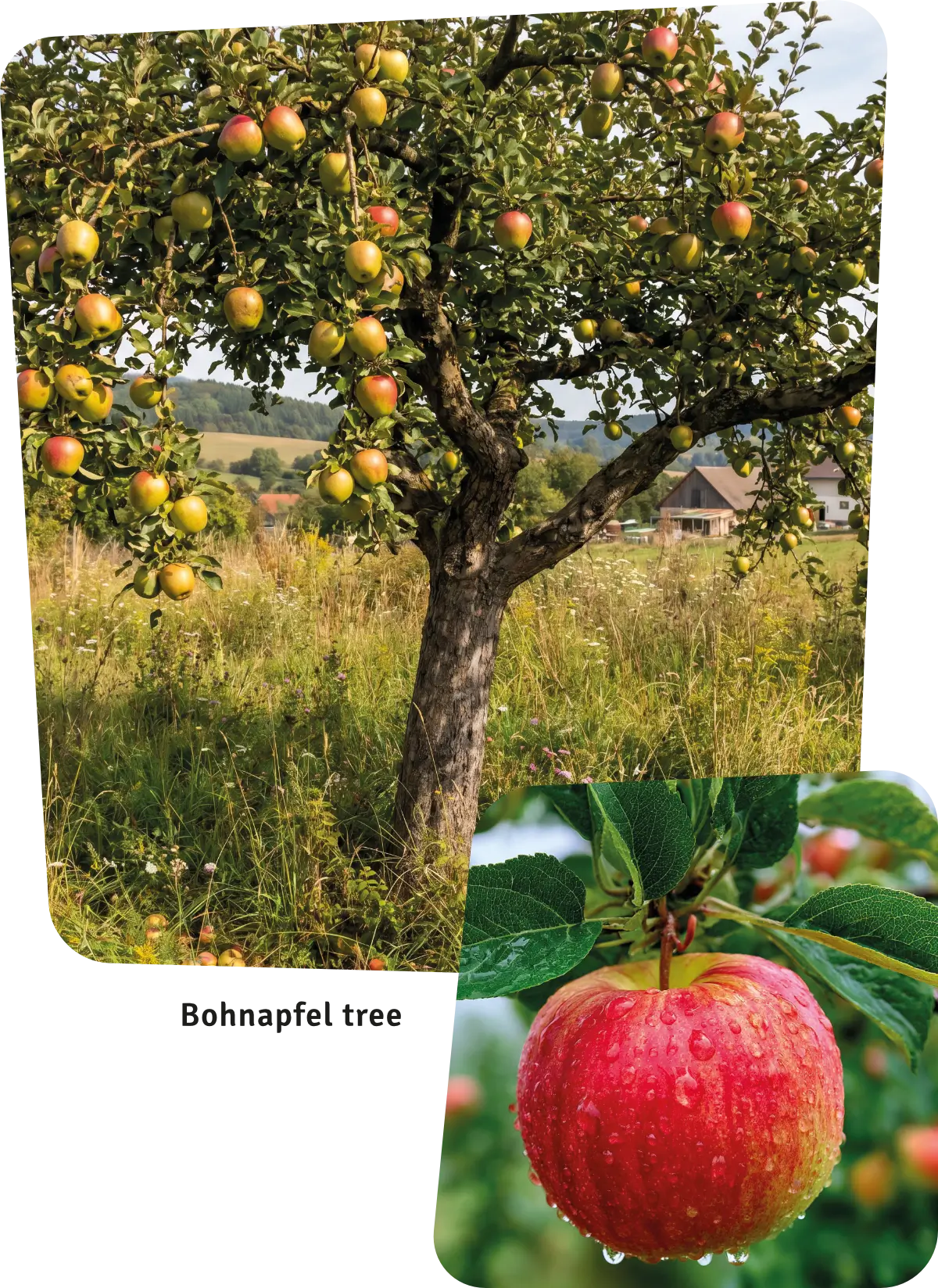
Fruit trees lining the paths formed a unique cultural feature that provided practical benefits whilst also helping to shape the picturesque landscape. Different so-called regional varieties proved successful in each region. In the Nízký Jeseník range, apple trees were most commonly planted along the paths. The nearest avenue of native fruit trees from the Nízký Jeseník region is located in Razová. The trees by the road have been tended by an experienced orchardist and arborist. There are plans to replant the existing avenue.
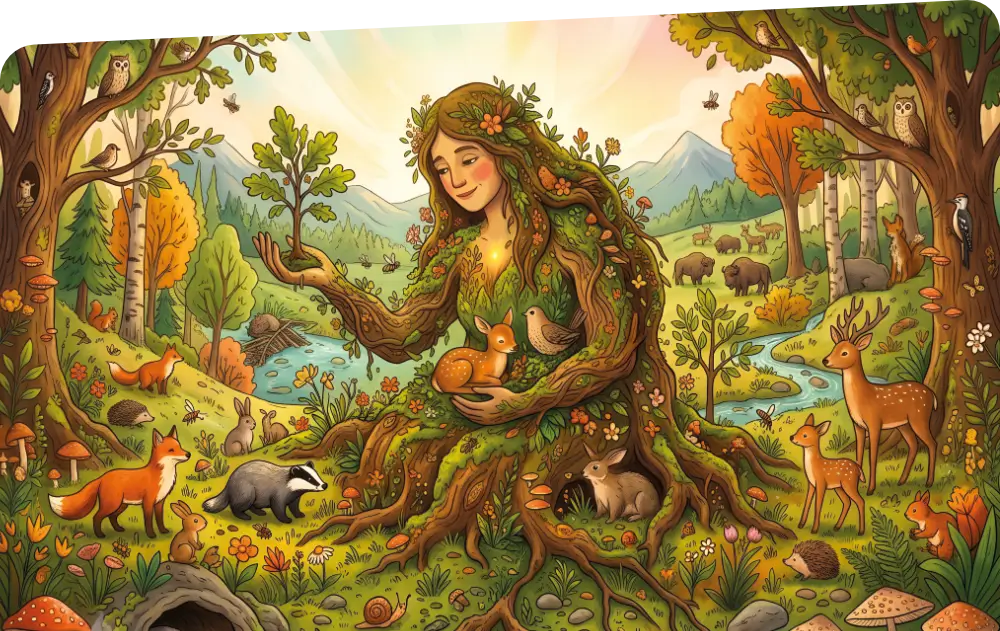
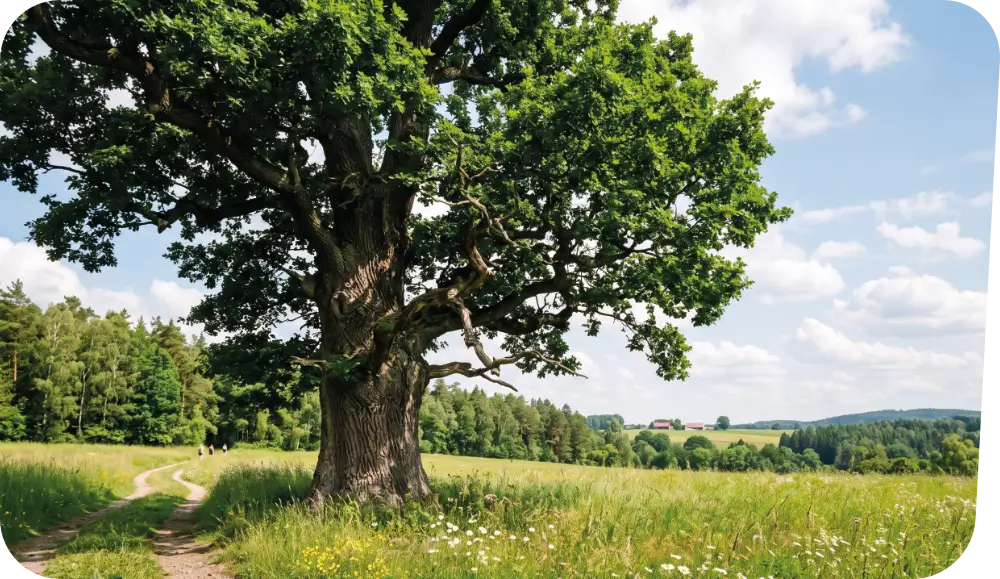
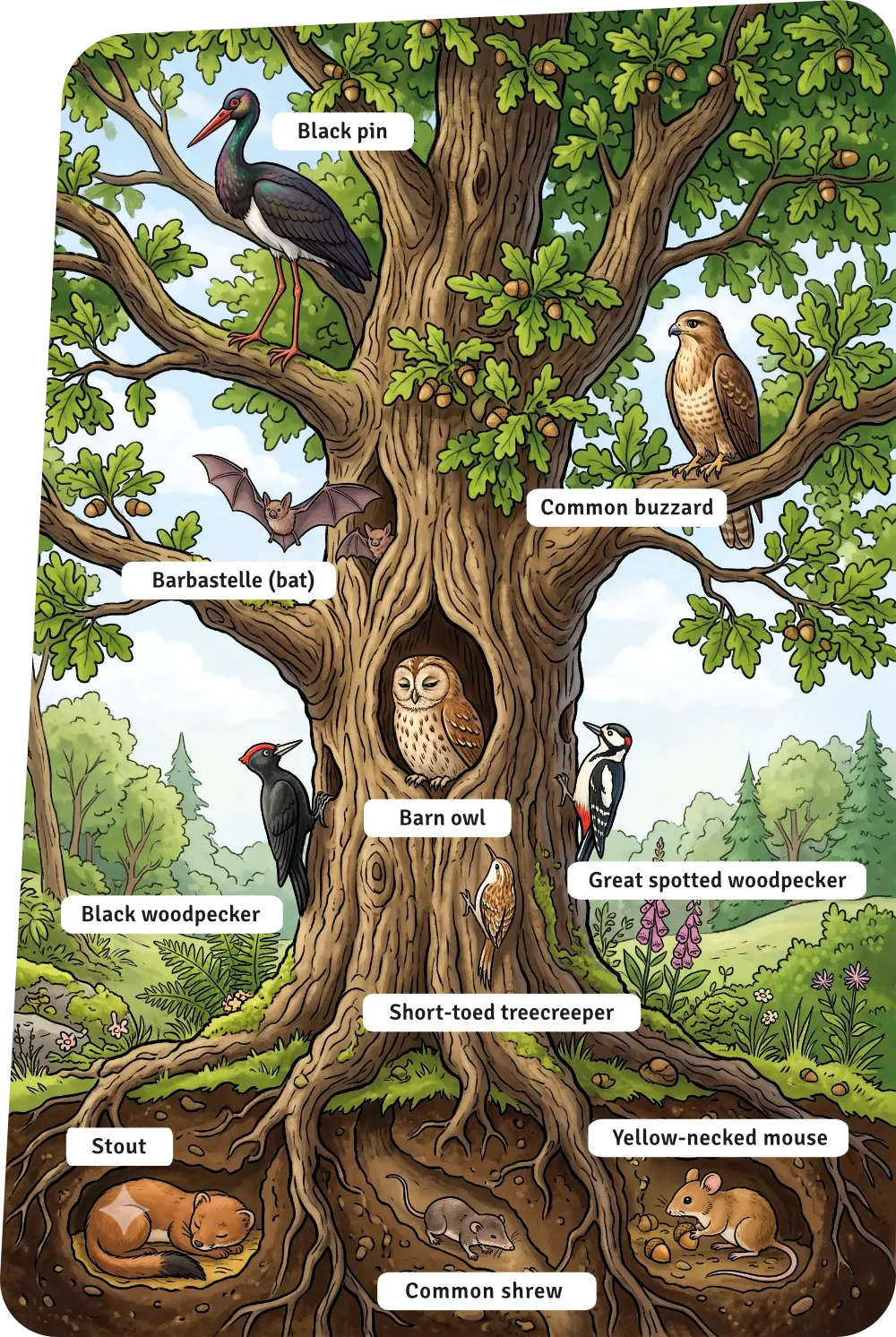
Old trees amaze us with their picturesque grandeur, and many of them often form unmissable landmarks in the landscape. They are the memory of a landscape that is constantly changing around them. However, old trees are far more important to the surrounding natural environment. Trees provide a home for other animals and organisms that would otherwise not survive in today's landscape. An old tree is literally teeming with life from its roots right up to its highest branches. Each level has its own typical inhabitants and visitors.